Search our website. If you can’t find what you’re looking for, get in touch at: creativelifestorywork@wearebluecabin.com
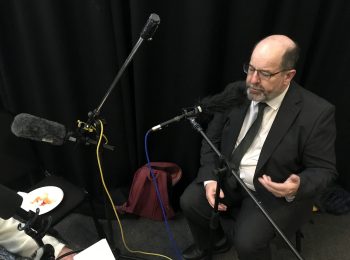
We invited Professor Richard Rose, of Therapeutic Life Story Work International, onto the Creative Life Story Work podcast to discuss attachment, trauma, and their impact on children and young people.
During our chat, Richard shared his definitions of attachment and trauma, and gave examples of how foster carers, professionals and anyone working with care-experienced children and young people can use this knowledge to better understand and support the children and young people in their care.
Here are some of Richard’s key takeaways from the episode.
Well, the actual concept of attachment obviously is vast. But if we think about it in a simplified way, attachment really is how someone has survived their first few years of life. And in that survival journey, how they’ve learned to make sure their needs are met.
So for some children, attachment is wonderful in a sense of, it provides all they need. They have good attachment models. They can get their needs met by the people around them that protect them and care for them.
Whereas many of the children that I work with have not had that easy opportunity of having their needs met. There may have been problems in the early years. There may be issues around their journey in the womb. There may be issues around domestic violence etc.
And so they have to think about ‘How do I get my needs met? Do I cry? Do I grab, do I take, do I wait patiently?’
And of course, many of the young people that you and I might come across are children that have learned behaviors that get their needs met. So if you have a child, for instance, has learnt that the only way to get my needs met is to take from somebody else, that might upset somebody that might be around that child.
But for that child, their intention wasn’t to upset them, their intention was to get their needs met, because otherwise, how do I survive?
Just like with attachment, there are so many different definitions of trauma. And, of course, trauma is a very unique situation for us. Not one of us will experience trauma in the same way.
Trauma is the unresolved residuals of events that we have not made our peace with, which goes alongside our current thinking around grief and loss. So grief and loss, you’ll never get over your grief and loss. You’ll never forget it. But what you do learn is how to live alongside it.
And it’s the same with trauma. We’re never going to forget a trauma event. We’re never going to forget what happened. But what we will be able to learn is to make sense of it. To understand we can’t change it, but it doesn’t have to define us.
So, for me, my simple explanation of definition would be trauma is the unresolved residuals of past events that we have not made our peace with.
Live Classroom: attachment
Monday 22 April 2026, 10am – 1pm
Refresh your knowledge of attachment and get practical tools you can use in your work with children and young people in this online training with Professor Richard Rose.
Find out more and book>>
Live Classroom: trauma
Monday 22 June 2026, 10am – 1pm
Develop an understanding of the impact of trauma on children, young people and adults, in an online Live Classroom with Professor Richard Rose.
Find out more and book>>
Membership is available for both individuals and for organisations, and gives you access to 12 Live Classrooms per year, plus all of our online resources.
Richard is the Director of Therapeutic Life Story Work International. He provides consultancy and training on Therapeutic Life Story Work and develops academic training programmes in the UK and internationally. Richard is a regular visitor to Australia where he is an Adjunct Associate Professor of Social Work and Social Policy at La Trobe University, Melbourne, and Honorary Associate of Berry Street, Melbourne. He is also an Honorary Associate of the Open Adoption Institute, University of Sydney. In the USA, he presents for Portland State University, DHS Oregon and ORPARC (Adoption Services). Richard is the author of The Child’s Own Story – Life Story Work with Traumatised Children (2004); Life Story Therapy with Traumatised Children – A Model for Practice (2012) and Innovative Therapeutic Life Story Work (2017).


