Search our website. If you can’t find what you’re looking for, get in touch at: creativelifestorywork@wearebluecabin.com
Kayleigh Dean is Life Story Worker at South Tyneside Council and has been using some of the All About Me toolkits and activities which are available on this website to support her work with children and young people. Here, she shares her experiences and picks out some of the activities she’s found useful.
South Tyneside Council began working with Blue Cabin and Richard Rose in 2018 and together we began creating tools and activities which can be used to support the All About Me stage of Creative Life Story Work. These are now available in the ‘resources’ section of the Creative Life Story Work website.
I have used several of these toolkits and activities when completing direct work with children. I have found that it supports relationship building because the child, professional and carer (if applicable) can all take part in the activities meaning you are sharing lives, sharing stories, and building positive relationships. The tools can be adapted to meet the needs of any child regardless of their age and/or developmental stage.
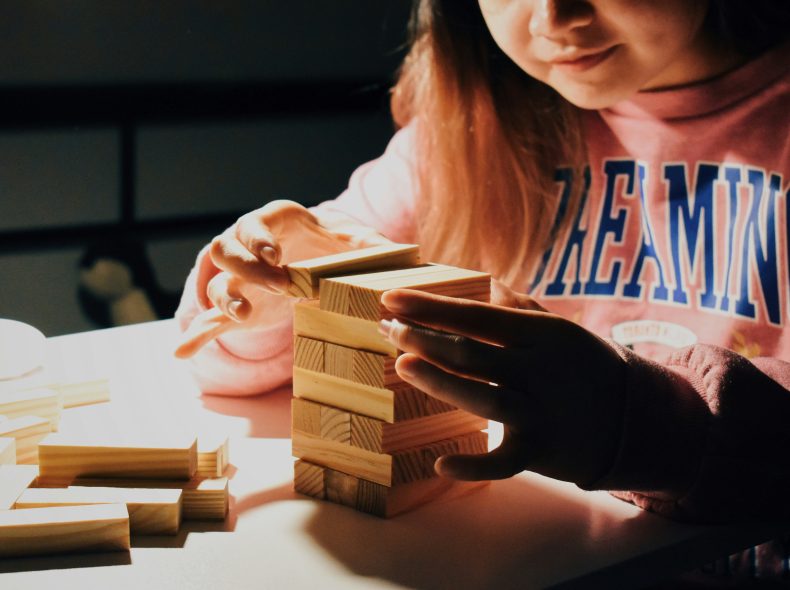
One tool I have used is playing Jenga with children. The basic Jenga game is an effective game for relationship building when you first meet a child or young person. I have also found that when you play this game alongside the child’s carer you are able to get a snapshot understanding of how the child interacts with their carer and some of the relationship traits (for example, letting the child win, being competitive, supportive etc).
See a toolkit on using Jenga games here>>
This tool has been developed further as there are a variety of 20 fun and more serious questions that you can write on individual bricks. When I have used this method I have found that the children tend to enjoy the activity, and usually want to find the bricks with the questions on so they can answer them.
Having fun through play is a key part of all the activities and because they are non-threatening, I have found that children are much more likely to be open with you. For example, when playing question Jenga some of the children’s answers have helped me to identify areas in their life that they may not have a full understanding of, or something they feel unhappy with, which can be explored further with them on a separate occasion if needed.
Activities are categorised using the six All About Me themes. The “this is me” theme has lots of tools which support the child to think about themselves and can help professionals to have a greater understanding about how the child sees themselves. I have completed a full body self portrait with one young person and their carer. This young person loved decorating their body outline, and then, when writing descriptive words on their portrait, it showed that whilst they often said negative things about themselves, they had lots of positives too. This provided professionals with a better understanding of the child through their eyes.
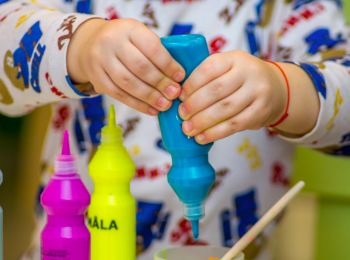
I have also used feelings cards to help children to understand the feelings they, and others have. The toolkit shows how you can first play a game where the child and carer/professional compete to name as many feelings as they can, and a selection is then chosen to be turned into the feeling cards. The young person I did this with used paints and their fingerprint to make characters like rabbits, aliens, and tadpoles which they then drew faces on to show different feelings. The young person was then able to reuse these cards which supported them in discussing and naming feelings.